| Status: | Active, open to new members |
| Coordinator: | |
| Group email: | Bird watching for All group |
| When: | Monthly on Thursday mornings 9:30 AM 4th Thurday in month |
| Venue: | Local Area |
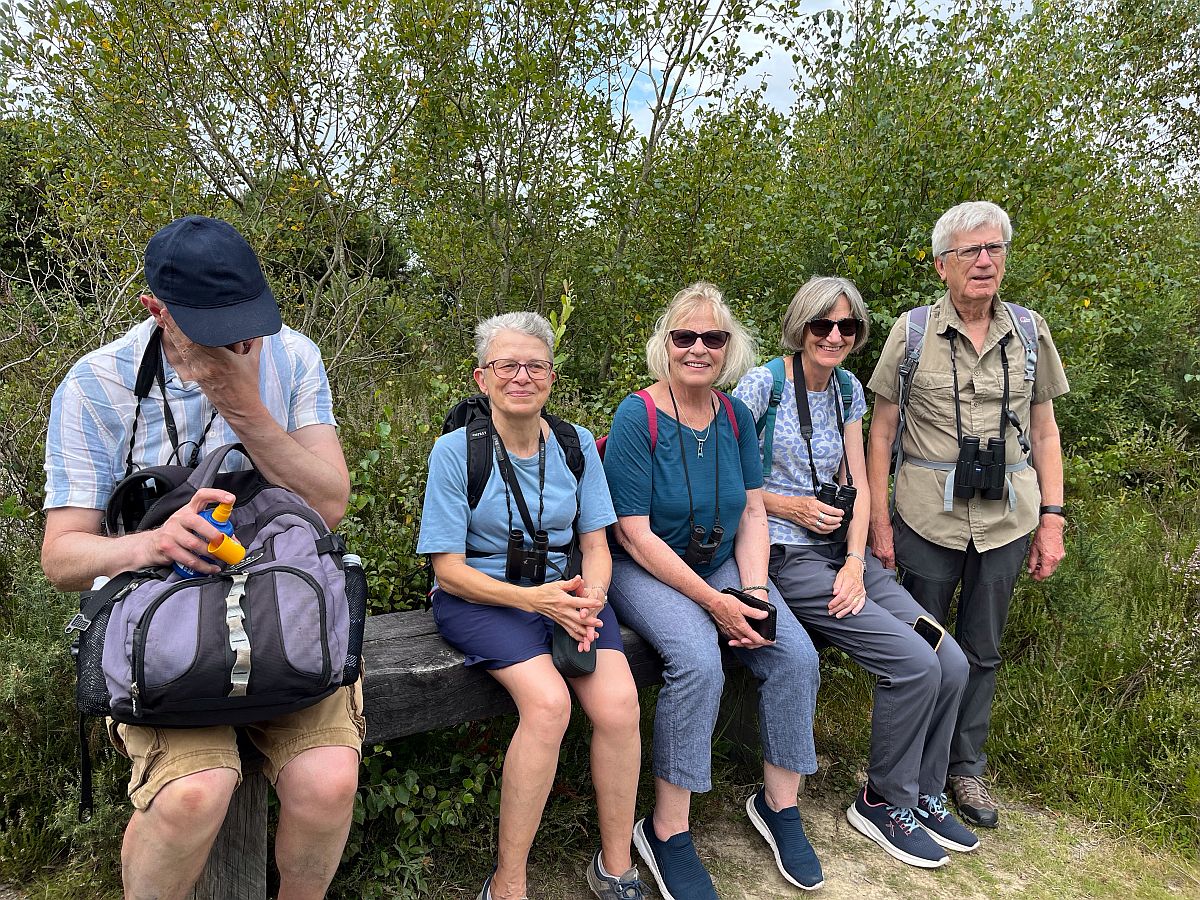
The Birdwatching Group meets monthly, currently on Thursday mornings, but this changes from time to time as the tides change. We generally have between 8 and 10 members on each trip and cover a range of birding knowledge. To find out more about this group please contact the coordinator by email through the link above -
Next Meetings :
Next month: TBD
September 2026: Six of us met at the station for the drive to the Otter nature Reserve. It was a lovely sunny morning and top layers were soon abandoned. We were going to walk around the half of the reserve nearest the sea, as we usually do, but we spotted birds to our left and walked the upper half instead. As expected, there was a lot of mud and not much was flooded, but there seemed to be more covered than we might have expected at low tide. In addition, to the birds on the mud and the river, there were smaller birds flitting among the bushes and trees to the left of the path. Many of us spotted warblers in the reeds, but not reed warblers, as you might expect, but most likely sedge warblers with brown streaky backs.
We kept passing another group of serious birders, all scopes and long camera lenses. Unusually, they weren’t very communicative or helpful in pointing out birds - I did wonder if they had a paid guide and thought we were trying to muscle in for free. It was a slow walk round, as we stopped so often but there was plenty to see. We might have spotted different gulls and geese if we had taken the other route, but were very pleased with the views we had. The bird list is shorter than sometimes, but the views, weather and company were good. Most of us stayed on for a welcome coffee in the very posh new Cricket Club Clubhouse. A very tempting menu was on offer as well.
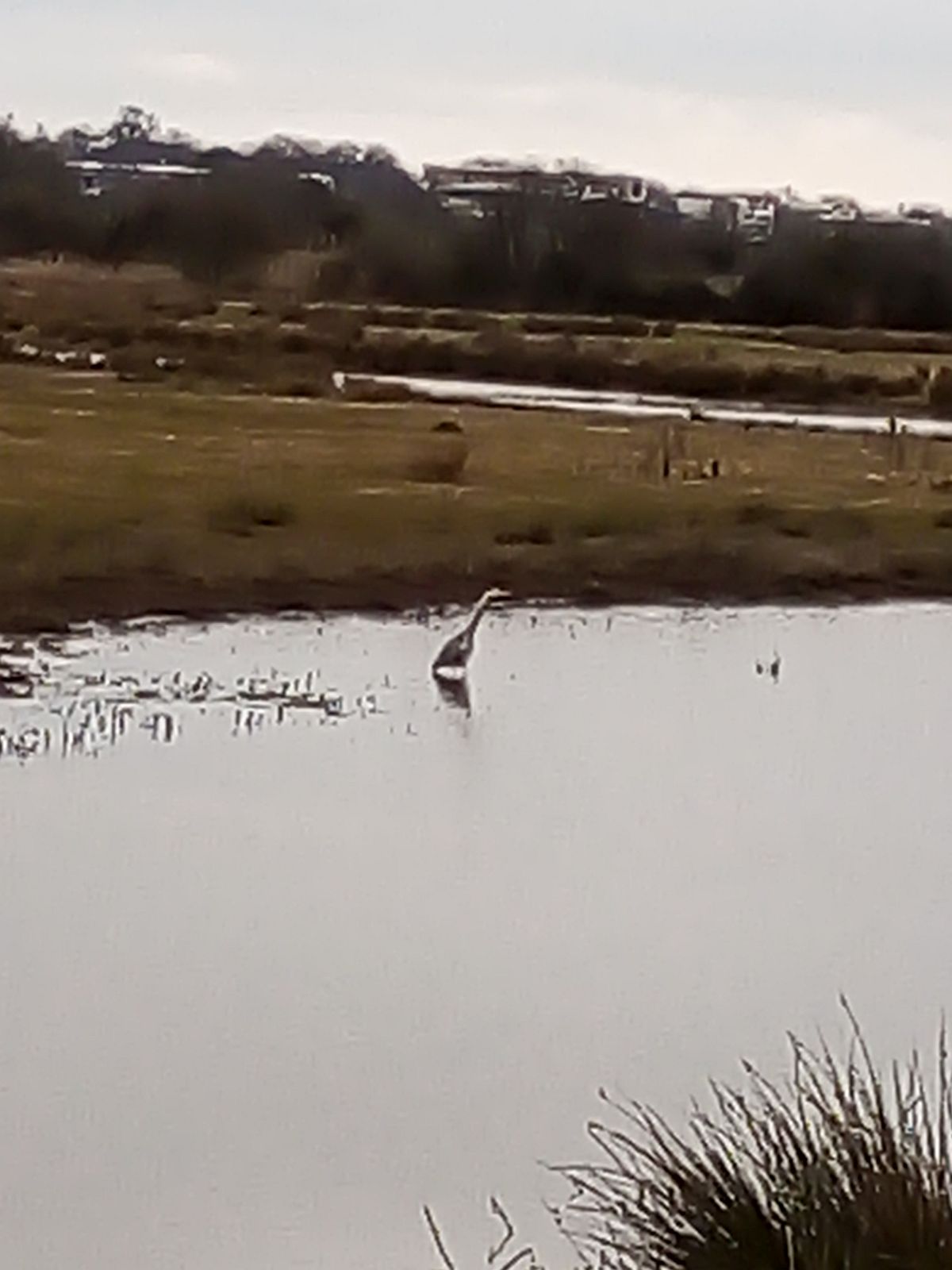
The birds seen or heard included: grey heron, little egret, curlew, cormorant, black-headed gull, herring gull, mute swan, shelduck, mallard, gadwall, teal, little grebe, moorhen, sedge warbler, robin, wren, goldfinch, greenfinch, chiffchaff, blue tit, dunnock, house sparrow, crow, rook, magpie and the rarely seen wood pigeon!
August 2026: ight of us met at the station in time to catch the train to Topsham. Sadly, two others who had planned to join us were not well enough on the day. The roads were damp in Topsham; it had clearly rained earlier. On entering the hide, we were faced with a massive shock: all the areas near to us that are normally underwater were empty and cracked. It will take some persistent rain to fill it again. Only on the far side was there any water, with just a flock of Canada geese visible. To add to the problems, there were a group of RSPB volunteers clearing the field to the side, disturbing any birds that might have wanted to land. There were other volunteers in the hide who apologised and showed the bird list for the day before which was very impressive. Clearly there had been hundreds of curlew on the same field where they were working. We decided to hang around for a while and see what might turn up, despite the work. Gradually, we were rewarded. A ringed plover was spotted near one of the puddles, a solitary godwit landed behind the geese. Different ducks emerged from the far reeds and a number of herons were hunting.
After some time, we walked down to the Estuary viewpoint. Now smaller than it used to be, we could see across the mudflats as the tide went out. More waders here, though not the number we might have hoped. And then a seal hauled itself out of the river and onto the mud - never seen one of those on this small tributary. We also heard a number of smaller birds singing in the surrounding trees and bushes.On to the Goatwalk for more waders. On the other side, we could see larger flocks of dunlin and godwit. A little egret came out of the reeds immediately in front of us. No avocets yet. By this time, it was sunny and warm. A better day for birds than we had feared when we first got to the hide. We each then made our own way back to the train or to the cafes of Topsham.
Birds seen or heard included: Canada goose, mallard, teal, wigeon, coot, moorhen, pied wagtail, heron, little egret, redshank, black-tailed godwit, ringed plover, dunlin, curlew, oystercatcher, cormorant, black swan, jackdaw, crow, blackbird, wood pigeon, robin, wren, blue tit, great tit, swallow, black-headed gull, herring gull, greater black-backed gull. And a Common Seal!
June 2026: An intrepid trio met in the Station Car Park yesterday, for the drive to Seaton Wetlands. Some couldn’t come because of diary clashes and others felt that the heat might be too much. After a slow journey, with lots of traffic, we got there before 10:30. It was slightly cooler than Crediton was forecast to be and there was a breeze off the estuary.
We started at the estuary hide, walking down through the reed beds, with three different warblers calling out. We did see reed warblers but others were hidden or flitted too fast to be identified. The hide is raised and all windows were open allowing a lovely breeze to blow through, so it didn’t feel that hot. A flotilla of swans greeted us with a sail by and there were lots of water birds to be seen. A family of shelducks and a little grebe just below us on one of the ponds was a highlight. As was an almost fully grown fledgling blackbird a couple of meters away demanding to be fed by its weary parent. On to the pond hide, again with a breeze blowing through. Closer views of the black-headed gulls and oystercatchers, with sand martins skimming at speed over the water.
Basically, we spent most of our time in the shade of the hides, walking slowly between them, in the shade and breeze where possible. We walked past the bank of sand martin nests; for a short while nothing came in or out as a large crow, with its beak open in the heat, was perched hoping to grab something - it failed. We had our lunch in the small hide overlooking a pond, where some of the group might remember having lunch two years go. It was very different, with no birds on it or calling. However, a blackbird and robin walked in and joined us, picking up any crumbs we might have dropped from right by our feet. They loaded their beaks, without eating, and hopped away to feed their nearby young.
On to our final hide, and the first time we had to walk in the full sun for a couple of hundred metres, which we hoped would look over the estuary again, but looked onto nothing. However, a meadow pipit perched on the tram line above us and then dropped into the stunted tree in front when a tram went past. We had excellent views as it was only a tram-track width away. We returned to the car and a shorter journey home, with the aircon on all the way, getting back by 3:15.
The birds seen or heard included: black-headed gull, herring gull, greater black-backed gull, curlew, oystercatcher, redshank, little egret, grey plover, grey heron, cormorant, mallard, shelduck, mute swan, moorhen, little grebe, reed warbler, sedge warbler, Cetti’s warbler, chiffchaff, linnet, robin, blackbird, wren, blue tit, house sparrow, greenfinch, sand martin, swallow, meadow pipit, crow, magpie, wood pigeon.
May 2026: Four of us met in the Station Car Park, with two others joining us at the lay-by at Shobroke. John had warned us that some fencing had been put up for the Students Summer Ball, but it was far more extensive than in previous years. However, we saw three woodpeckers in the first few yards and swifts passed overhead. The far side of the lake was full of huge tents, marquees, portaloos and stalls. Lots of electrical machinery tightening bolts, etc. Not surprisingly, there wasn’t a lot of life on the water, though a fisherman caught a huge fish, showing that there was life within it.
We walked along the lake side, passing the bridge, with very few swallows or martins compared with what we saw there three years ago. Very gradually, we made our way up to the treeline and walked back through the avenue of trees. By the time we got back to the cars, we could feel the temperature beginning to rise; up to that point it had been a very pleasant for walking, after the heatwave of the past few days.
Despite all the noise and activity, we still ended up with quite a reasonable list. The birds heard or seen included: Canada goose, mallard, tufted duck, great-crested grebe, moorhen, swallow, swift, house martin, rook, crow, raven, jackdaw, herring gull, blackbird, song thrush, great spotted woodpecker, blackcap, goldfinch, greenfinch, chaffinch, great tit, blue tit, robin, house sparrow, wren, nuthatch, wood pigeon, grey wagtail.
April 2026: Six of us met in the Station Car Park for the trip to Budleigh, welcoming Janet for the first time birdwatching. Just before they arrived, Brian and Jo had picked up a traffic warning to say that the M5 was closed at junction 30 and that all routes through Exeter were snarled up. We made the decision to revert to Plan A and visit the Arboretum.
Though there was a bit of a breeze - it picked up more in the afternoon - we were quite sheltered among the trees. Our birdwatching started in the two car parks, hearing a woodpecker drumming at the station and watching swallows and martins fly above us at Newton St Cyres Village Hall. Once again, we heard a lot more than we saw. When we got to to the viewpoint over the valley, where you can see for miles, there wasn’t a single bird to be seen.
However, walking through the trees, there was a surround sound of birds calling, even if they weren’t flitting from tree to tree. Given the number of insects around, we thought that might have meant more bird movement and feeding. Merlin came to our aid, allowing us to identify all the different species calling, even those which sing at a higher frequency than some of us could hear.
Despite the change of plan and the lack of movement, it was a very enjoyable stroll amongst good company.
Birds seen or heard (always confirmed by more than one Merlin app) included: rook, crow, jackdaw, magpie, house martin, swallow, herring gull, blackbird, blue tit, great tit, house sparrow, dunnock, redstart, firecrest, robin, wren, chiffchaff, blackcap, starling, chaffinch, greenfinch, wood pigeon.
Feb 2026: 6 of us met in the Station car park, dividing into two cars for the drive to Powderham. The drive was uneventful apart from a flood across the road to Powderham church itself, but we all made it across safely. The birdwatching started as soon as we got out of the cars, with herons in the field behind. Lots of birds were calling, particularly some noisy pheasants, but we were pleased that Merlin picked up a treecreeper which we finally spotted high above us.
Despite a little drizzle, we walked down over the railway to the seawall. As well as the usual waders, we were pleased to see a number of mergansers on the water. There was a cool breeze coming over the hill so we didn’t stand around for too long at any one point. There were a reasonable number of Brent geese still on the water which flew off as the tide rose. As we got closer to Topsham, we could see a couple of the Black Swans which are now resident there. Once we got to the point where the water reached the wall, we turned round and made our way back to the cars.
The birds seen/heard included: grey heron, Brent goose, Canada goose, shelduck, mallard, teal, curlew, oystercatcher, red-crested merganser, cormorant, black swan, greater black-backed gull, herring gull, black-headed gull, moorhen, pied wagtail, crow, rook, magpie, treecreeper, blue tit, Robin, wren, house sparrow, goldfinch, chaffinch, blackbird, wood pigeon, pheasant
Jan 2026: Here is this month's report:
Only four off us met yesterday in the station car park. As there had been a points failure earlier in the morning, the 9:29 and the 9:52 trains were cancelled as the rolling stock wasn’t in the right place. As we didn’t go to St David’s en route, we agreed to call in at Dart’s Farm for the facilities. This meant that we passed fields of Brent Geese - always a wonderful sight.
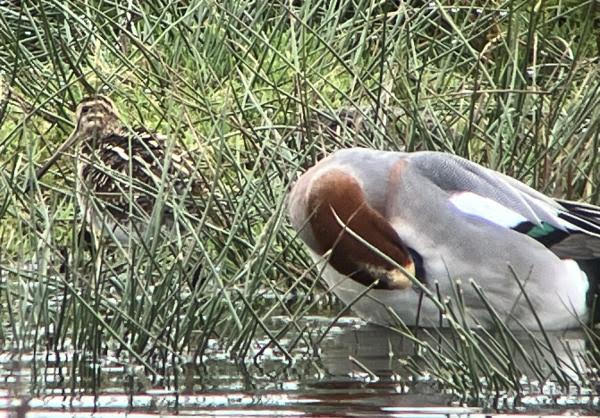
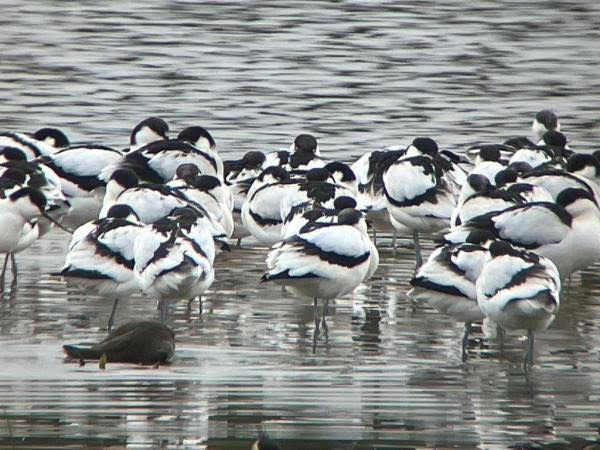
There were flood warnings on the river Cyst and the water level at Bowling Green was higher than we have ever seen it. It seemed too deep for some of the usual waders - only one godwit was spotted there. However, flocks of avocets came in whilst we were there, looking beautiful in the occasional sunshine. Alongside them were large numbers of lapwing and redshank. There were several snipe in the reeds, both to the left and the right. We have had closer views of these elusive birds before, but have never seen so many at the same time. Other, more experienced birders had seen a greenshank and spotted redshank before our arrival, but they had now gone.
Having spent a good hour at the hide, we walked down to the Estuary viewpoint to find that it was still flooded, almost 3 hours after high tide. Apparently, it was a particularly high tide. However, it was clearly very shallow as waders, including a flock of godwits, started to come down. The tide was still fairly high as we walked along the Goat Walk, but there was a beautiful group of Turnstones, doing exactly what their name says.
We managed to get back to the car before the rain started again in earnest.
Birds seen included: Canada Goose, Brent Goose, Shelduck, Black-tailed Godwit, Curlew, Redshank, Avocet, Lapwing, Turnstone, Snipe, Mallard, Pochard, Wigeon, Teal, Pintail, Cormorant, Moorhen, Crow, Jackdaw, Magpie, Little Egret, Blackbird, Robin, Blue Tit, Long-tailed Tit, Song Thrush, Wood Pigeon.